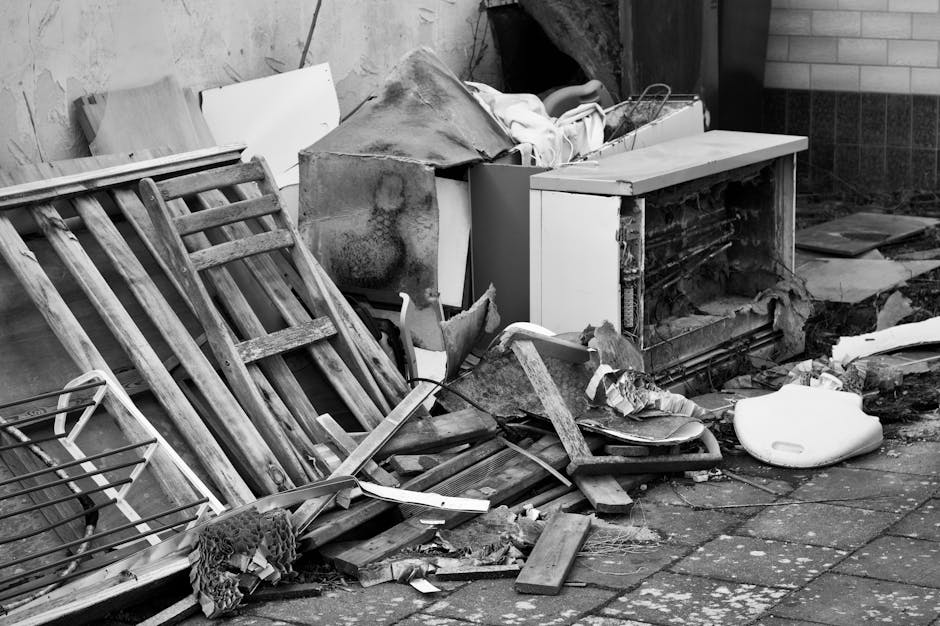
Thorpe Park bulky rubbish removal options from Chertsey
If you are trying to clear bulky rubbish near Thorpe Park, the job can get awkward fast. One minute it is a single old wardrobe; the next, you are staring at a heap of broken furniture, tired office bits, a mattress, and a fridge that nobody wants to touch. Thorpe Park bulky rubbish removal options from Chertsey are all about getting that clutter moved safely, legally, and without turning your day into a full-scale faff.
This guide breaks down the practical choices available, how the process usually works, who each option suits, and what to watch for before you book anything. We will also cover simple ways to avoid extra costs, how to think about access around the Thorpe Park and Chertsey area, and which related services may help if your bulky waste is part of a bigger clearance.
Table of Contents
- Why Thorpe Park bulky rubbish removal options from Chertsey Matters
- How Thorpe Park bulky rubbish removal options from Chertsey Works
- Key Benefits and Practical Advantages
- Who This Is For and When It Makes Sense
- Step-by-Step Guidance
- Expert Tips for Better Results
- Common Mistakes to Avoid
- Tools, Resources and Recommendations
- Law, Compliance, Standards, or Best Practice
- Options, Methods, or Comparison Table
- Case Study or Real-World Example
- Practical Checklist
- Conclusion
- Frequently Asked Questions
Why Thorpe Park bulky rubbish removal options from Chertsey Matters
Bulky rubbish is not just "stuff in the way". It can block walkways, slow down a move-out, create fire risk in storage areas, and make a property look neglected. Around Thorpe Park, where visitor traffic, staff access, and time-sensitive operations can all matter, the wrong pile-up becomes a real inconvenience very quickly.
For local homes, flats, offices, and commercial units, bulky waste often appears at exactly the wrong time: after a refit, before a handover, following a tenant change, or after a long-overdue sort-out in a garage or loft. In those moments, speed matters, but so does doing things properly. A quick fix that is not compliant can come back and bite you. Bit of a pain, truth be told.
Choosing the right removal option also helps with recycling. Many bulky items are not just "rubbish" in the everyday sense. Furniture, appliances, metal shelving, cardboard-packed display units, and mixed furniture parts can often be separated and handled more responsibly. If sustainability matters to you, have a look at recycling and sustainability practices before you decide how to clear the lot.
And there is another point people often miss: bulky waste is awkward to move. It can scratch floors, snag walls, and create lifting risks. A sensible removal plan is not just tidier; it is safer for everyone involved.
How Thorpe Park bulky rubbish removal options from Chertsey Works
Most bulky rubbish removal jobs follow a similar pattern, even if the details vary by property type. The process usually starts with an assessment of what needs to go, how much space it will take, and whether there are any items that need special handling, such as fridges, electronics, or potentially hazardous materials.
From there, the provider may give an estimate based on volume, item type, access, and labour. That matters more than many people realise. A straightforward ground-floor collection is very different from carrying a sofa down narrow stairs in a top-floor flat. If you want a clearer picture of pricing structure, it is worth reading the site's pricing and quotes information before booking.
In practical terms, you will usually see a few broad approaches:
- Single bulky item collection for one or two large pieces, such as a bed base or wardrobe.
- Mixed bulky waste clearance for a load of furniture, packaging, and household or business overspill.
- Room or area clearance when a loft, garage, office, or flat needs a more complete emptying.
- Special item removal for fridges, appliances, mattresses, sofas, and similar heavy or awkward items.
If the job is part of a wider property clearance, options like house clearance, home clearance, or garage clearance may fit better than treating everything as isolated bulky rubbish. That little distinction can save time and often makes the job feel less chaotic.
For businesses near Thorpe Park, especially offices or customer-facing spaces, an approach tied to business waste removal may be the better fit, because it keeps operational disruption low and helps separate routine waste from larger one-off items.
Key Benefits and Practical Advantages
The obvious benefit is that the clutter disappears. But the real value is usually broader than that.
- Less disruption - bulky items are removed in one go rather than sitting around for days.
- Safer premises - fewer trip hazards, fewer blocked exits, and less strain from moving heavy loads yourself.
- Cleaner handovers - especially useful for landlords, tenants, facilities teams, and businesses finishing a fit-out.
- Better presentation - useful if you are preparing a property for sale, re-let, or reopening.
- More responsible disposal - items can be sorted for reuse, recycling, or specialist handling where needed.
There is also the stress factor. People underestimate this. You may think, "It is only a sofa and a mattress." Then you look at the stairwell, the weather turns, the neighbour needs access, and suddenly the sofa feels twice its size. Having a clear removal route takes the pressure off.
For specific furniture loads, the dedicated pages for furniture clearance and furniture disposal are especially useful, while items like old beds are often best dealt with through mattress and sofa disposal.
Small practical win: if the team can load everything in one visit, you avoid the stop-start pattern that turns a simple job into an all-day saga.
Who This Is For and When It Makes Sense
This kind of removal is not only for people with a dramatic clear-out on their hands. In fact, many jobs are fairly ordinary, just bulky. That still counts.
- Homeowners replacing old sofas, wardrobes, mattresses, or white goods.
- Landlords and letting agents dealing with left-behind items after a tenancy ends.
- Office managers clearing broken chairs, desks, filing cabinets, or redundant equipment.
- Facilities teams handling mixed waste from maintenance or refit work.
- Builders and trades needing fast removal of oversized debris after strip-out or fit-out.
- People downsizing and clearing lofts, garages, or spare rooms that have quietly filled up over the years.
It makes sense when the waste is too awkward for normal household bins, too heavy for one person to manage safely, or too much for a standard car boot run. It also makes sense when the site access is messy enough that hiring a skip would be clumsy or impractical.
If the bulky rubbish is mixed with renovation waste, builders waste clearance may be more appropriate. If it sits inside a larger room or property tidy-up, a broader service like flat clearance or office clearance can be a better match.
Ask yourself one simple question: do you want the items gone, or do you want the whole space reset? The answer usually tells you which route to choose.
Step-by-Step Guidance
If you want a smoother collection, a bit of prep goes a long way. Here is the practical version, not the overly tidy version people write for brochures.
- List the items clearly. Write down what you have, including rough sizes and anything heavy, fragile, or awkward.
- Separate special waste. Keep appliances, electricals, and anything potentially hazardous apart from ordinary furniture.
- Check access. Look at stairs, lifts, loading bays, parking, gates, and any narrow corridors that could slow the job.
- Ask about the disposal route. If reuse or recycling is important, mention that early.
- Get a quote that matches the real job. A vague estimate is fine at first, but the final scope should reflect the actual load.
- Prepare the area. Clear small loose items, move valuables, and protect floors if needed.
- Confirm timing. A morning collection can be easier if the site is busy later in the day.
For appliance-heavy loads, the dedicated fridge and appliance removal page is worth a look. Fridges, in particular, are not just "another boxy thing"; they are bulky, awkward, and often need specific handling.
If your job includes old carpets, loose household junk, or items from multiple rooms, combine the plan with home clearance or house clearance rather than booking everything separately. That often keeps the whole thing tidier.
Expert summary: the best bulky rubbish removal jobs are rarely the ones with the fanciest equipment. They are the ones where the waste has been identified properly, access has been thought through, and the collection method matches the real mix of items.
Expert Tips for Better Results
Here is where a little experience saves a lot of hassle.
- Group items by type. Furniture, appliances, and general junk should not be scattered across the site if you can help it.
- Measure the awkward pieces. A quick width check on a sofa or desk can prevent a surprise on collection day.
- Keep doors and access points open. It sounds obvious, but it avoids those slow, clumsy moments where everyone is waiting around.
- Be honest about the load. If there is more waste than first expected, say so early. It is better than pretending the pile is smaller than it is.
- Think about reuse first. A usable chair or table may be better handled as furniture rather than mixed rubbish.
There is also a good sustainability habit here: if the items are clean and structurally sound, ask whether they can be diverted away from disposal. Not everything has to be "the waste pile". Sometimes that old office chair just needs a second life somewhere else.
For anything that needs careful sorting or secure removal, the pages on confidential shredding and hazardous waste disposal may be relevant. Not every bulky job involves those issues, but when it does, you do not want to guess.
And yes, the best tip of all is boring: don't wait until the day before a move or handover. That is when simple things become late-night problems.
Common Mistakes to Avoid
Most bulky rubbish jobs go smoothly enough, but the avoidable mistakes are always the same. Funny how that works.
- Underestimating volume - one extra wardrobe can change the loading plan more than you think.
- Mixing special items into ordinary waste - fridges, electricals, and hazardous materials need separate attention.
- Ignoring access issues - no lift, tight corners, or poor parking can affect the job and the price.
- Booking the wrong service type - a single-item pickup is not the same as a full room clearance.
- Waiting too long - especially when a property needs to be empty by a certain time.
Another subtle mistake is forgetting to think about the aftermath. If a room still needs sweeping, if screws are left behind, or if a cabinet was removed but the wall fixings remain, the job does not quite feel finished. Not a disaster, but you notice it.
If the load comes from a garage, loft, or shed, it may be smarter to use a more specific service such as loft clearance or garage clearance. Those services usually match the reality of the space more closely than a general "remove a few things" mindset.
Tools, Resources and Recommendations
You do not need much equipment for a well-managed bulky waste job, but a few practical tools help.
- Measuring tape for checking wide furniture and awkward clearances.
- Marker labels or notes to separate items for reuse, disposal, or special handling.
- Protective gloves if you are moving anything light before the crew arrives.
- Blankets or floor protection if furniture needs to be manoeuvred through finished interiors.
- Mobile photos of the waste pile, useful when you are requesting a quote or confirming scope.
On the service side, a few site pages can help you plan the job more confidently:
- what can go in a skip - useful if you are comparing bulky waste removal against skip hire.
- recycling and sustainability - helpful if you want items sorted with environmental care in mind.
- insurance and safety - a sensible read when heavy lifting, access routes, and on-site risk matter.
- payment and security - useful if you want to understand how booking and payment are handled.
If you are still weighing up the provider, about us can help you understand the business approach, while complaints procedure is worth a quick glance for peace of mind. Nobody plans to need it, obviously, but trust is built from the unglamorous pages too.
Law, Compliance, Standards, or Best Practice
Bulky rubbish removal in the UK should be treated carefully, especially where there is commercial waste, electrical equipment, or materials that may be hazardous. The exact obligations depend on the item type, the premises, and who is producing the waste, so it is wise to avoid sweeping assumptions.
At a practical level, good practice usually means:
- keeping waste streams separated where possible;
- avoiding the disposal of restricted items with general rubbish;
- using a provider that can handle loading safely;
- making sure any sensitive business waste is handled securely;
- choosing routes that support recycling or recovery where practical.
For business settings, that can be especially important. Office furniture, archived paperwork, old screens, and mixed fit-out waste can create different handling needs. A good operator should be able to explain how the load will be processed in plain English, without hiding behind jargon.
Safety matters too. Heavy items can crush fingers, strain backs, and damage interiors. If a job looks borderline risky to move manually, that is usually a sign to step back and let trained people handle it. No prize for heroics here.
For items with special handling needs, the relevant service page is the safest place to start: hazardous waste disposal for risky materials, and fridge and appliance removal for white goods. The point is to match the item to the method, not force everything into one bucket.
Options, Methods, or Comparison Table
Choosing the right bulky rubbish removal option usually comes down to the type of waste, how much there is, and how fast you need it gone. Here is a simple comparison.
| Option | Best for | Strengths | Watch-outs |
|---|---|---|---|
| Single-item collection | One sofa, bed, mattress, fridge, or wardrobe | Simple and quick | Can become less efficient if items multiply |
| Bulky waste clearance | Mixed large items and general overspill | Flexible and practical | Needs a clear item list to avoid confusion |
| Room or property clearance | Lofts, garages, flats, offices, and end-of-tenancy jobs | Good for larger resets | Requires better planning and access checks |
| Skip hire | Sites with space and a steady stream of waste | Handy for longer projects | Less ideal for bulky items that need lifting from inside |
If you are not sure which to choose, think about where the waste is sitting. Inside a property with stairs? Removal service. Outside with repeated ongoing waste? Skip may be worth considering. Mixed furniture and general items from one room? A clearance style service usually wins.
You can also compare your situation against the guidance on what can go in a skip. That page is a good reality check before you decide whether a skip is genuinely the easier route.
Case Study or Real-World Example
Picture a small office close to Thorpe Park that has upgraded its layout over a weekend. By Monday morning, there are six old office chairs, two desks, a broken filing cabinet, a couple of mixed storage units, and a printer that nobody wants to look at twice. Nothing outrageous. Just enough to get in the way.
The team could have tried to move it piecemeal over several days, but that would have meant lifting at the wrong moments, cluttering the corridor, and losing time in a space that needed to reopen quickly. Instead, they grouped the items in one room, confirmed access in advance, and arranged a focused collection through an appropriate waste removal route.
The result was simple: the room was cleared in one session, the office did not need to babysit the mess all week, and the staff could get back to work without walking around a heap of furniture every time they went to make tea. Honestly, that alone is worth a lot.
In a domestic version of the same story, a family clearing a garage after years of slow accumulation might discover that a general bulky rubbish pickup is only part of the answer. The remainder could involve garage clearance and perhaps a small amount of furniture disposal. That mix-and-match approach is often the cleanest solution.
Practical Checklist
Use this before collection day. It keeps things calm, which is no bad thing.
- Make a full list of all bulky items.
- Separate furniture, appliances, and any potentially hazardous waste.
- Measure large items and note stair or lift access.
- Check parking or loading access near the property.
- Confirm whether the job is a single-item pickup or a broader clearance.
- Remove personal belongings from drawers, cupboards, and shelves.
- Protect floors or doorframes if the route is tight.
- Ask whether items can be recycled or reused where practical.
- Review payment, timing, and any terms before the team arrives.
- Have a clear point of contact on the day if the site is busy.
Quick takeaway: the smoother the preparation, the smoother the removal. Simple as that.
Get a free quote today and see how much you can save.
Conclusion
Thorpe Park bulky rubbish removal options from Chertsey work best when the waste is matched to the right method, the access is thought through early, and the disposal route is chosen with both speed and responsibility in mind. That is the sweet spot. Not overcomplicated, not rushed, just sensible.
If you are clearing one awkward item, a mixed pile of furniture, or a larger space that has quietly become a storage problem, there is usually a straightforward route through it. A good plan saves time, reduces stress, and keeps the site safer for everyone involved. And once the clutter is gone, the difference can feel oddly uplifting - more room, less noise, less visual mess. You notice it straight away.
When you are ready, choose the option that fits the space, not just the rubbish. That one decision tends to make the rest of the job feel a lot easier.
Frequently Asked Questions
What counts as bulky rubbish?
Bulky rubbish usually means large household or commercial items that are too big for standard bins. Common examples include sofas, mattresses, wardrobes, desks, chairs, shelving, and some appliances.
Is bulky rubbish removal from Chertsey suitable for Thorpe Park businesses?
Yes. It can be a good fit for offices, hospitality spaces, and operational premises near Thorpe Park that need large items removed without interrupting day-to-day work.
Can I mix furniture and appliance removal in one collection?
Often, yes, but it depends on the items involved. Furniture and appliances can usually be managed together if the provider knows the full load in advance, especially if a fridge or other special item is included.
Is a skip better than bulky rubbish removal?
Not always. A skip can be useful for ongoing waste or building work, but bulky items often need lifting from inside a property, which makes a removal service more practical.
Do I need to sort the waste before collection?
A basic sort helps a lot. Separate ordinary furniture, appliances, and anything potentially hazardous so the team can handle the load safely and efficiently.
How do I know which service to choose?
Think about the size of the load, where it is located, and whether the job is just one item or a wider clearance. If it is part of a room, loft, garage, or full property clear-out, a broader clearance service may be better.
Can bulky items be recycled?
Sometimes, yes. Many items can be broken down and sorted into recyclable components or passed on for reuse where suitable. The condition and material type matter.
What if my item is a fridge or another appliance?
Appliances can need special handling, especially fridges and freezers. A dedicated appliance service is often the safest and most practical option.
Is bulky rubbish removal useful for landlords and letting agents?
Very much so. It is often used after tenants move out, when left-behind furniture or clutter needs removing quickly before cleaning, inspection, or re-marketing.
How can I keep the cost down?
Be accurate about the load, group items together, and prepare access in advance. The less guesswork there is, the easier it is to quote properly and avoid surprises.
What should I do with confidential or sensitive business waste?
Keep it separate from general bulky rubbish and use a secure disposal route. Documents and sensitive materials should not be mixed with ordinary clearance waste.
Where can I find more information about the company and its policies?
You can review the site's about us, health and safety policy, insurance and safety, and terms and conditions pages for extra context before booking.